
Dragi Kimovski | Alpen-Adria-Universität Klagenfurt | Friday, December 18, 2020 | 11:00 (CET, 10:00 UTC) | online
Abstract: The computing continuum extends the high-performance cloud data centers with energy-efficient and low-latency devices close to the data sources located at the edge of the network. However, the heterogeneity of the computing continuum raises multiple challenges related to application and data management. These include (i) how to efficiently provision compute and storage resources across multiple control domains across the computing continuum, (ii) how to decompose and schedule an application, and (iii) where to store an application source and the related data. To support these decisions, we explore in this thesis, novel approaches for (i) resource characterization and provisioning with detailed performance, mobility, and carbon footprint analysis, (ii) application and data decomposition with increased reliability, and (iii) optimization of application storage repositories. We validate our approaches based on a selection of use case applications with complementary resource requirements across the computing continuum over a real-life evaluation testbed.
Bio: Dragi Kimovski is a postdoctoral researcher with “Zielvereinbarung” at the Institute of Information Technology (ITEC), University of Klagenfurt. He earned his doctoral degree in 2013 from the Technical University of Sofia. He was an assistant professor at the University for Information Science and Technology in Ohrid, and a senior researcher and lecturer at the University of Innsbruck. During his career, he conducted multiple research stays at the University of Michigan, University of Bologna, and University of Granada. He was a work package leader and scientific coordinator in two Horizon 2020 projects (ENTICE and ASPIDE), and coordinated the OeAD AtomicFog project. He co-authored more than 40 articles in international conferences and journals. His research interests include parallel and distributed computing, fog and edge computing, multi-objective optimization, and distributed processing for bioengineering applications.
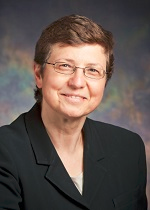

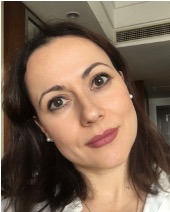
 Bio: Laura Toni received the M.S. and Ph.D. degrees, both in electrical engineering, from the University of Bologna, Bologna, Italy, in 2005 and 2009, respectively. In 2007, she was a Visiting Scholar at the University of California at San Diego (UCSD), San Diego, CA, USA, and since 2009, she has been a frequent visitor to the UCSD, working on media coding and streaming technologies. Between 2009 and 2011, she was with the Tele-Robotics and Application Department, Italian Institute of Technology, investigating wireless sensor networks for robotics applications. In 2012, she was a Postdoctoral Fellow at UCSD, and between 2013 and 2016, she was a Postdoctoral Fellow in the Signal Processing Laboratory (LTS4) at École Polytechnique Fédérale de Lausanne, Lausanne, Switzerland. Since July 2016, she has been a Lecturer in the Electronic and Electrical Engineering Department, University College London (UCL), U.K. Her research mainly involves interactive multimedia systems, decision-making strategies under uncertainty, large-scale signal processing, and communications. She received the UCL Future Leadership Award in 2016, the ACM Best 10% Paper Award in 2013, and the IEEE/IFIP Best Paper Award in 2012.
 Bio: Lucia D’Acunto received her PhD in 2012 from Delft University of Technology, the Netherlands, with a thesis on video streaming over peer-to-peer networks. She now works as a senior research scientist at TNO, focusing on video distribution and on the impact of future internet architectures (e.g. ICN, SDN and 5G) on it. She has led and is leading various European research projects on these topics, most notably the open call projects from the European Projects TRIANGLE, 5GINFIRE and FLAME. Since 2016, Lucia is an active participant and contributor to the 3GPP SA4 group, which focusses on mobile and 5G standardization for media applications. Lucia also serves in the organizing committees of several international conferences, usually in the roles of program chair or demo chair, and in the program committees. Lucia also regularly advises European operators on network and TV technologies and contributes to 5GPPP and NEM visions on the 5G Media Vertical and pilots. Lucia has published her research in several papers and journals and holds more than 15 patent applications.
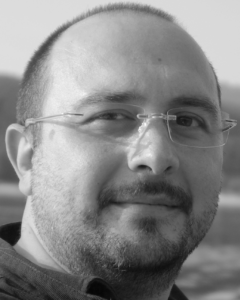 CV: Giovambattista Ianni is a full professor of Computer Science in the Department of Mathematics and Computer Science at the University of Calabria, Italy. Prof. Ianni’s current research interests include knowledge representation, reasoning, and coupling of hybrid systems. He recently focused his research interests on Artificial Intelligence in videogames with particular attention to the issue of complex and time-consuming incremental reasoning in real-time contexts. He has contributed to the DLV system and the DLVHEX system, especially dealing with the issue of dealing with, often non-symbolic, external information to knowledge bases. He has been involved in several national and international research projects and has been acknowledged with research awards such as the ICLP Test-of-time award 2018 and the Artificial Intelligence Journal Prominent Paper Award 2013.