As a leading global supplier of wafer fabrication equipment and services to the semiconductor industry, Lam Research develops innovative solutions that help our customers build smaller, faster, and more power-efficient devices.
We are a company comprised of people who work hard, deliver outstanding results and maintain a sense of humor during even the most challenging times. Our success results from our employees‘ diverse technical and business expertise, which fuels close collaboration and ongoing innovation. We know that our dynamic, global team of exceptional employees is essential to our continued growth.
Join the Lam Research team, where you can play a vital role in the future of electronics and write your own success story.
Alturos Destinations ist ein internationaler Key Player, welcher mit seinen Lösungen für eine perfekte Planung und Umsetzung von Digitalisierungsstrategien im Tourismus sorgt.
An unserem Standort im Lakeside Science & Technology Park in Klagenfurt suchen wir neue motivierte MitarbeiterInnen. Folgende Positionen gelangen zur Besetzung:
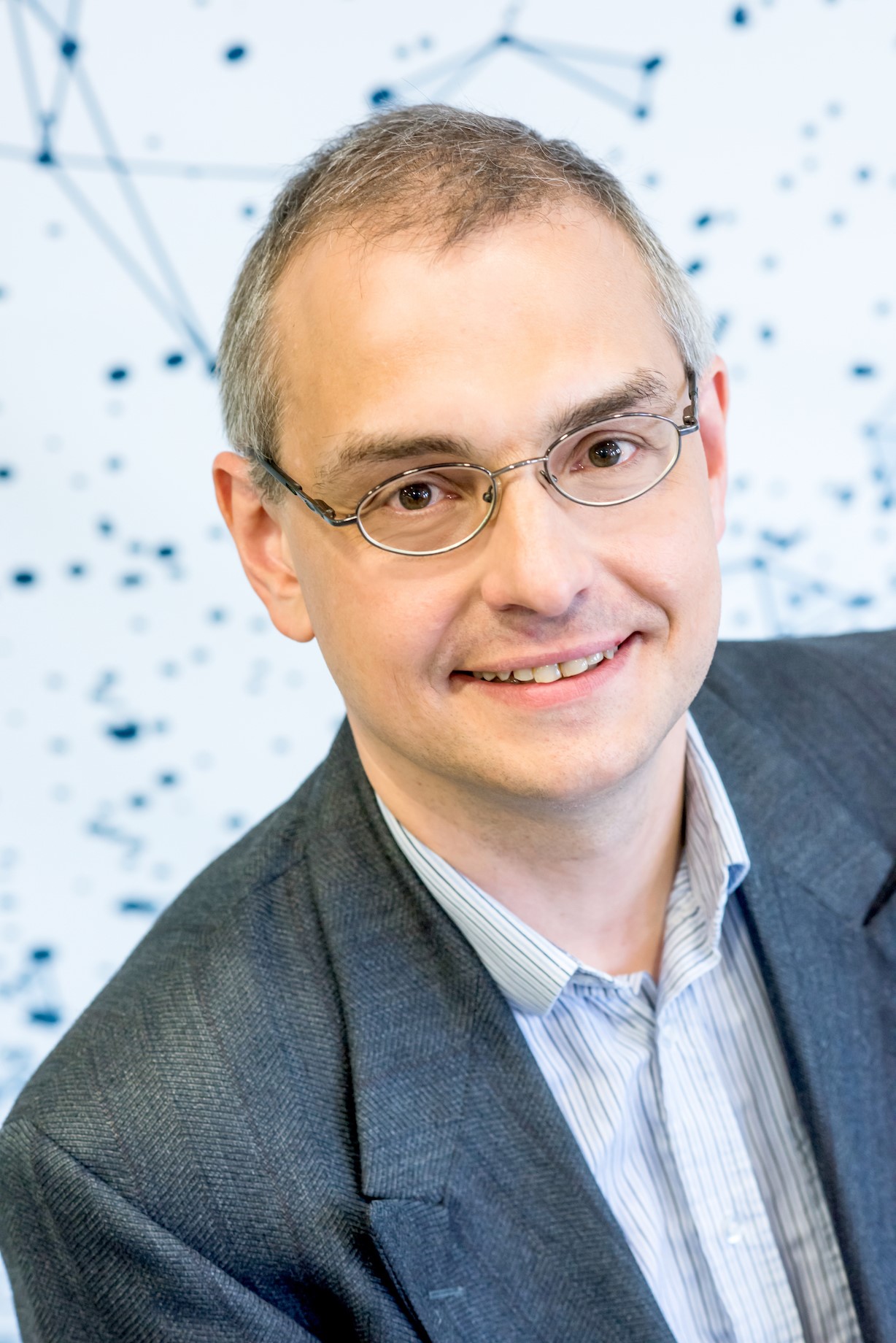
Werner Bailer | Joanneum Research, Graz | Friday, June 25, 2021 | 10:00 (CET, 08:00 UTC) | online
Abstract:
Artificial neural networks have been adopted for a broad range of tasks in multimedia analysis and processing, such as visual and acoustic classification, extraction of multimedia descriptors or image and video coding. The trained neural networks for these applications contain a large number of parameters (weights), resulting in a considerable size. Thus, transferring them to a number of clients using them in applications (e.g., mobile phones, smart cameras) benefits from a compressed representation of neural networks.
MPEG Neural Network Coding and Representation is the first international standard for efficient compression of neural networks (NNs). The standard is designed as a toolbox of compression methods, which can be used to create coding pipelines. It can be either used as an independent coding framework (with its own bitstream format) or together with external neural network formats and frameworks. For providing the highest degree of flexibility, the network compression methods operate per parameter tensor in order to always ensure proper decoding, even if no structure information is provided. The standard contains compression-efficient quantization and an arithmetic coding scheme (DeepCABAC) as core encoding and decoding technologies, as well as neural network parameter pre-processing methods like sparsification, pruning, low-rank decomposition, unification, local scaling and batch norm folding. NNR achieves a compression efficiency of more than 97% for transparent coding cases, i.e. without degrading classification quality, such as top-1 or top-5 accuracies.
This talk presents an overview of the context, technical features and characteristics of NN coding standard, and discusses ongoing topics such as incremental neural network representation.
Werner Bailer is a Key Researcher at DIGITAL – Institute for Information and Communication Technologies at JOANNEUM RESEARCH in Graz, Austria. He received a degree in Media Technology and Design in 2002 for his diploma thesis on motion estimation and segmentation for film/video standards conversion. His research interests include audiovisual content analysis, multimedia retrieval and machine learning. He regularly contributes to standardization, among others in MPEG, where he co-chairs the ad-hoc group on neural network compression.
Posted inTEWI-Kolloquium|Kommentare deaktiviert für Standardising the compressed representation of neural networks
As a leading global supplier of wafer fabrication equipment and services to the semiconductor industry, Lam Research develops innovative solutions that help our customers build smaller, faster, and more power-efficient devices.
This success is the result of our employees‘ diverse technical and business expertise, which fuels close collaboration and ongoing innovation. Join the Lam Research team, where you can write your own success story. Help us solve our customers‘ toughest problems and be part of a company that plays a vital role in the future of electronics.
Abstract: We overview the edge computing status from a telecommunication networks perspective, give a definition, introduce an example. We discuss the different driving forces in the telecommunication and cloud industry and go thorugh the different solution proposals. We cover the networking, cloud and management aspects and show the different options using the example.
Posted inTEWI-Kolloquium|Kommentare deaktiviert für Edge computing in 5G networks
Prämierung der besten Diplom- bzw. Masterarbeiten aller Studien der Technischen Fakultät an der Universität Klagenfurt
Der Förderverein Technische Fakultät an der Universität Klagenfurt schreibt die Prämierung der besten Diplom- bzw. Masterarbeiten aller Studien der Technischen Fakultät an der Universität Klagenfurt des laufenden Studienjahres aus.
Der Preis besteht aus einer Urkunde und einer Prämie in Höhe von
EUR 1.500,–
Die Jury ist ermächtigt den Preis gegebenenfalls zwischen mehreren Diplom- bzw. Masterarbeiten zu teilen. Antragsberechtigt sind Absolventinnen und Absolventen aller Studienrichtungen der Technischen Fakultät der Universität Klagenfurt, die Mitglied beim Förderverein sind (Beitrittserklärung hier!) und deren Diplom- bzw. Masterarbeit mit “Sehr Gut” beurteilt wurde. D.h. AbsolventInnen der folgenden Masterstudien: Informatik, Informationsmanagement, Informationstechnik, Technische Mathematik bzw. Lehramtsstudien mit einem Unterrichtsfach der TEWI zugeordnet (sofern die Diplom- bzw. Masterarbeit einem dieser Unterrichtsfächer zuzuordnen ist).
Es werden nur Diplom- bzw. Masterarbeiten bewertet, die im Zeitraum vom 1. Januar 2020 bis zum 31. Dezember 2020 fertiggestellt wurden. Als Fertigstellungstermin gilt der Tag der Ausstellung des Gutachtens/Beurteilung (lt. ZEUS). Die Einreichfrist für die Verleihung des Preises endet am 31. Juni 2021.
Der Antrag ist beim Geschäftsführer des Förderverein Technische Fakultät an der Universität Klagenfurt einzureichen und soll folgendes beinhalten:
Diplom- bzw. Masterarbeit (in elektronischer Form als PDF-Datei).
Gutachten des Betreuers der Masterarbeit.
Allfällige Software (oder Verweise auf existierende Software).
Eine kurze Zusammenfassung (max. eine Seite), die so geschrieben sein soll, dass sie auch für Nicht-ExpertInnen verständlich ist!
Beurteilungskriterien für die Zuerkennung des Preises sind strikt fachlicher qualitätsbezogener Natur. Sie umfassen die Aspekte:
wissenschaftlicher Gehalt,
Innovationsgehalt und Umsetzbarkeit,
Klarheit der Darstellung und Qualität der Ausführung.
Die Zuerkennung des Preises erfolgt durch eine Jury per Vorstandsbeschluß. Die Jury besteht i.a. aus:
dem Obmann des Förderverein Technische Fakultät an der Universität Klagenfurt (Vorsitz),
Vertretern der TEWI-Institute der Universität Klagenfurt und
Vertretern der institutionellen Mitglieder des Förderverein Technische Fakultät an der Universität Klagenfurt.
Der Geschäftsführer des Förderverein Technische Fakultät an der Universität Klagenfurt kann zu den Sitzungen der Jury als nichtstimmberechtigtes Mitglied beigezogen werden. Die Sitzungen der Jury sind geschlossene Sitzungen und die Entscheidungen der Jury sind endgültig. Der Rechtsweg ist ausgeschlossen.
Die Preisverleihung findet üblicherweise im Rahmen einer TEWI-Veranstaltung statt.
Posted inNews|Kommentare deaktiviert für Roland-Mittermeir-Preis: Ausschreibung 2020
Bitmovin, a YCombinator company, is a fast-growing privately owned technology leader, located in San Francisco, CA and Klagenfurt, Austria. The company was founded by the co-creators of international media standards like MPEG-DASH, that is used today by Netflix, Youtube, and others. Bitmovin is the technology leader in online video technologies such as cloud-based encoding, adaptive streaming players, 360°/VR streaming and performance analytics. Bitmovin is backed by top investors such as Atomico as well as industry leaders like the former VP Engineering of Netflix, former CTO of Cisco, founder of Unity3D, and many others. Bitmovin’s customers include the top media and technology companies worldwide, including Ooyala, RTL, Pro7Sat1, Bouygues Telecom, Cloudflare, Technicolor, Televisa, Zattoo and many others.
Working at Bitmovin is fast-paced, fun and challenging with colleagues and customers worldwide.
We want to support students from technical schools like HTL to get work experience and also to support them in writing their thesis during an internship. If you are interested in an internship at Bitmovin, please upload your CV, school certificate (Zeugnis), motivation letter with additional information about your expectation on Bitmovin. Please note that for internships it makes sense to stay at least 2 months at Bitmovin to ensure also a good learning experience for you. We will go back to you with feedback as soon as possible.
https://bitmovin.com/careers/
Bitmovin is an equal opportunity employer. We value diversity at our company and do not discriminate on the basis of race, religion, color, national origin, gender, sexual orientation, age, marital status, veteran status, or disability status.
Bitmovin does not accept unsolicited referrals or resumes from any source other than directly from candidates. The submission of referrals or resumes by anyone other than a candidate directly to Bitmovin will be deemed gratuitous, and the company will not be obligated or bound in any way to pay any fee if the candidate is hired.
Posted inStellenausschreibungen|Kommentare deaktiviert für Internship Engineering – Software development
Der Förderverein Technische Fakultät an der Alpen-Adria-Universität Klagenfurt wünscht allen Mitgliedern ein frohes Weihnachtsfest und einen guten Start in ein erfolgreiches Jahr 2021!
Abstract: The computing continuum extends the high-performance cloud data centers with energy-efficient and low-latency devices close to the data sources located at the edge of the network. However, the heterogeneity of the computing continuum raises multiple challenges related to application and data management. These include (i) how to efficiently provision compute and storage resources across multiple control domains across the computing continuum, (ii) how to decompose and schedule an application, and (iii) where to store an application source and the related data. To support these decisions, we explore in this thesis, novel approaches for (i) resource characterization and provisioning with detailed performance, mobility, and carbon footprint analysis, (ii) application and data decomposition with increased reliability, and (iii) optimization of application storage repositories. We validate our approaches based on a selection of use case applications with complementary resource requirements across the computing continuum over a real-life evaluation testbed.
Bio: Dragi Kimovski is a postdoctoral researcher with “Zielvereinbarung” at the Institute of Information Technology (ITEC), University of Klagenfurt. He earned his doctoral degree in 2013 from the Technical University of Sofia. He was an assistant professor at the University for Information Science and Technology in Ohrid, and a senior researcher and lecturer at the University of Innsbruck. During his career, he conducted multiple research stays at the University of Michigan, University of Bologna, and University of Granada. He was a work package leader and scientific coordinator in two Horizon 2020 projects (ENTICE and ASPIDE), and coordinated the OeAD AtomicFog project. He co-authored more than 40 articles in international conferences and journals. His research interests include parallel and distributed computing, fog and edge computing, multi-objective optimization, and distributed processing for bioengineering applications.
Posted inTEWI-Kolloquium|Kommentare deaktiviert für Cloud, Fog, or Edge: Where and When to Compute?
Klara Nahrstedt | University of Illinois | Thursday, December 17, 2020 | 15:00 (CET, 14:00 UTC) | online
Abstract: With the emergence of 360-degree cameras, VR/AR display devices, ambisonics auditory devices, more diverse 360-degree multi-modal content has become available and with it the challenging demands for the capability of navigating within the 360-degree multi-modal content to enhance users’ multi-modal experience. In this talk, we will discuss the challenges of navigating through the 360-degree multi-modal content in a HMD-Cloud-based distributed environment, and discuss the concept of the navigation graph to organize the 360-video content for successful delivery and viewing. We will dive into more details of the navigation graph’ concept as one possible direction of potential solutions to represent views-objects-tiles navigation. We will show how navigation graphs are serving as models for viewing behaviors in the temporal and spatial domains to perform a better rate adaptation of tiled media associated with view and object predictions. The experimental results are encouraging and support the claim that the navigation graph modeling provides a strong representation of navigation and viewing patterns of users, and its usage enhances the streaming and viewing quality in 360-degree video applications. We conclude the talk with research opportunities that this area is offering.
Joint work with UIUC collaborators: Dr. Jounsup Park, Mingyuan Wu, Eric Lee, Bo Chen, and UMass collaborators: Ariel Rosenthal, Yash Shah, John Murray, Kevin Spiteri, Dr. Michael Zink, Dr. Ramesh Sitaraman.
Bio: Klara Nahrstedt is the Ralph and Catherine Fisher Professor in the Computer Science Department, and Director of Coordinated Science Laboratory in the College of Engineering at the University of Illinois at Urbana-Champaign. Her research interests are directed toward Internet-of-Things systems, tele-immersive systems, end-to-end Quality of Service (QoS) and resource management in large scale distributed systems and networks, and real-time security and privacy in cyber-physical systems such as power grid. She is the co-author of multimedia books `Multimedia: Computing, Communications and Applications‘ published by Prentice Hall, and ‘Multimedia Systems’ published by Springer Verlag.
She is the recipient of the IEEE Communication Society Leonard Abraham Award for Research Achievements, University Scholar, Humboldt Research Award, IEEE Computer Society Technical Achievement Award, ACM SIGMM Technical Achievement Award, TU Darmstadt Piloty Prize, the Grainger College of Engineering Drucker Award, and the former chair of the ACM Special Interest Group in Multimedia. She was the general co-chair and TPC co-chair of many international conferences including ACM Multimedia, IEEE Percom, IEEE IOTDI and others. Klara Nahrstedt received her Diploma in Mathematics from Humboldt University, Berlin, Germany in 1985. In 1995 she received her PhD from the University of Pennsylvania in the Department of Computer and Information Science. She is ACM Fellow, IEEE Fellow, AAAS Fellow, and Member of the German National Academy of Sciences (Leopoldina Society).
Posted inTEWI-Kolloquium|Kommentare deaktiviert für Navigation in 360-Degree Video Content: Challenges, Solutions and Opportunities